iPhone 14 Pro Hard OLED Screen Replacement
Want to keep strong OLED quality without paying full Premium Platinium pricing? Our hard OLED screen replacement for iPhone 14 Pro offers vivid colors, deep contrast, and a premium look at a more affordable cost than Premium Platinium or soft OLED options.
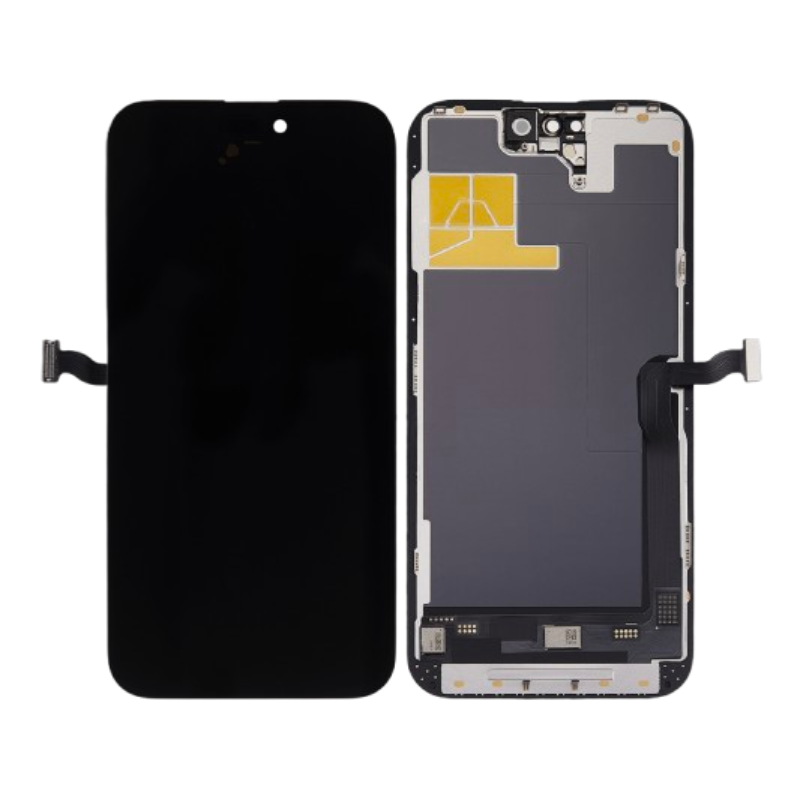
What Is a Hard OLED Screen for iPhone 14 Pro?
The iPhone 14 Pro comes from the premium with a flexible OLED display. In our hard OLED option, we install a high-quality rigid OLED panel – still OLED technology, but built on a glass-based (non-flexible) structure. This gives you strong color, contrast, and sharpness, while staying more affordable than Premium Platinium or soft OLED.
Hard OLED vs. Premium OLED – Key Differences
Both premium and hard OLED panels use OLED technology, but the construction is different. Hard OLED is built on a rigid glass substrate instead of a flexible base:
- Panel Structure: Hard OLED is a rigid, glass-based panel. The premium screen uses a more flexible OLED structure that can absorb small twists and bends better.
- Display Quality: Compared to LCD, hard OLED provides deeper blacks, higher contrast, and more vivid colors. Compared to Premium Platinium OLED, quality is close, but not identical – especially in extreme brightness and color accuracy.
- Brightness & Viewing: Hard OLED is usually bright enough for everyday indoor and outdoor use, but peak brightness and HDR performance may be slightly below premium Platinium panels.
- Touch & Smoothness: Touch response is generally very good and feels much closer to the premium OLED than an LCD option.
Durability, Impacts & Break Risk
Because hard OLED is built on a rigid glass layer, the internal display is naturally a bit more delicate under impact:
- The inner OLED layer has less flexibility than the premium flexible OLED panel or soft OLED replacements.
- With strong corner or side impacts, the chance of the inner screen cracking can be slightly higher compared to soft OLED.
- This is a normal characteristic of rigid OLED construction and does not mean the part is poor quality.
- Using a good case and high-quality screen protector is strongly recommended to reduce the risk of damage.
In short: hard OLED offers excellent visuals at a better price point, but is a little less forgiving to heavy drops and twists than a flexible soft OLED panel.
Who Is the Hard OLED Option Best For?
The hard OLED option is ideal if you:
- Want OLED-style color and contrast without paying full Premium Platinium price.
- Care about how your screen looks for social media, photos, videos, and everyday apps.
- Are okay with a slightly higher break risk than soft OLED in exchange for better pricing.
- Use your phone normally and plan to keep a solid case and screen protector on it.
If you want the closest possible match to the premium screen in every detail – including maximum durability, brightness, and touch behavior – our soft OLED, Premium Plus, or Premium Platinium options may be a better fit.
Common Problems Fixed by the Hard OLED Screen Replacement
- Cracked or shattered front glass
- Colored lines, flickering, or black areas on the screen
- Touch not working or only responding in some parts of the display
- Ghosting, burn-in, or severe image retention on the old screen
- Previous low-quality replacement with poor color or brightness
Why Choose One Fix Tech for Your Hard OLED Screen?
- We explain all screen options – LCD, hard OLED, soft OLED, Premium Plus, and Premium Platinium – before starting.
- High-quality hard OLED panels tested before and after installation.
- Professional, careful installation to protect your device and internal components.
- Lifetime warranty on parts – we stand behind the screens we install.
- Fast turnaround so you can get your iPhone 14 Pro back quickly.
Ready to Upgrade Your Screen?
Walk in anytime during business hours or book an appointment online. We can also compare hard OLED with soft OLED and Premium Platinium options in-store so you can choose what fits your needs and budget best.
Book Hard OLED Screen Repair